June 2026

This will be a short post.
June was pretty uneventful. All systems did ok with the exception of monthly rotation which is showing the worst monthly and worst cumulative performance since going live. I have allocated the least amount of capital to this system. I think it’s important to continue running all systems with an open mind, and not draw any quick conclusions until the systems have been running at least until the end of the year (if not longer).
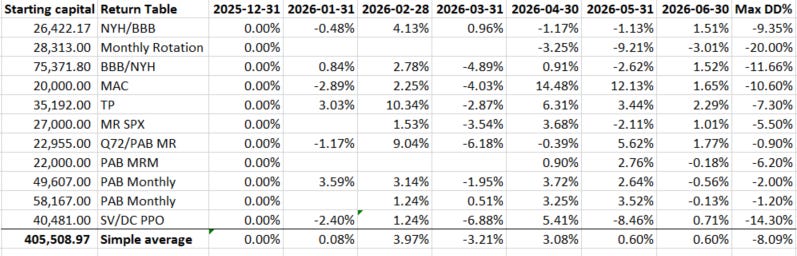
The best performing systems in June were:
MAC (Moving Avg Channel), TP (Trend Pilot), NYH (New Yearly High) and BBB (Bollinger Band Breakout), PAB MR (Price Action Mean Reversion), and MR SPX (Mean Reversion SPX).
The worst performing system in June was:
Monthly Rotation
Flat systems in June were:
DC PPO/MR, PAB Monthly, and PAB MRM
Some comments on the above results:
The performances of MAC, TP, NYH, BBB, PAB MR, and MR SPX were most likely attributable to strength in USD vs CAD, as opposed to strong signals during the month. The USD ended the month at 1.42 vs 1.38 at the beginning of the month, so that provided a boost to all systems trading in USD’s.
MR SPX takes A LOT of trades, and inventories trades until the exit signal is met. Sometimes, the exit signal doesn’t come very quickly (a 2 period RSI of an individual signal can bounce around below 85 for some time, 20 bars or more sometimes). Lately, it has produced more exits as it seems that market dynamics may be shifting from crowded momentum trades to oversold SPX constituents (rotation?).
I want to monitor this system closely. YTD since going live, it has returned +.57% with a ton of trades, so I am not sure if it is worth continuing with system or not. Perhaps if market conditions get more volatile and momentum fades, this system will pick up return as funds flow out of momentum elsewhere, into oversold stocks?
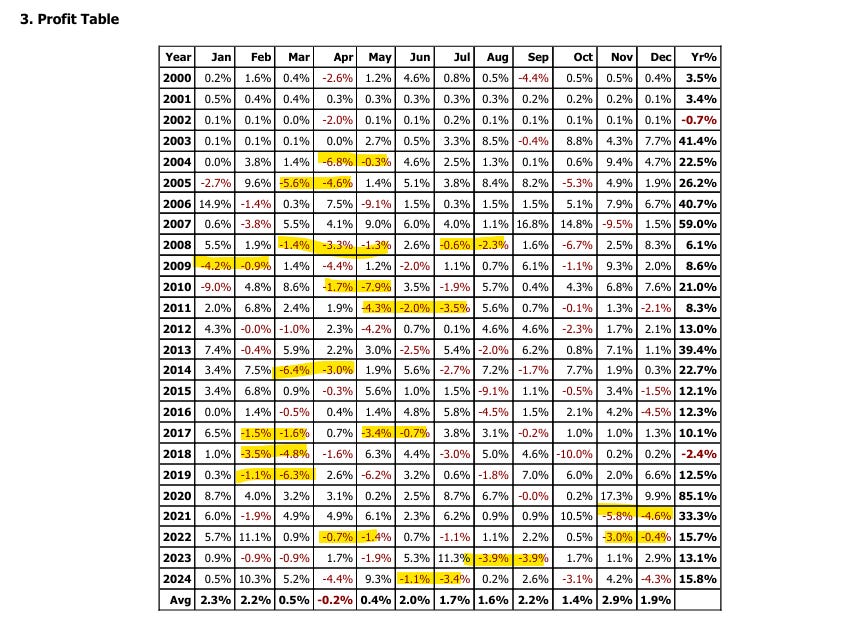
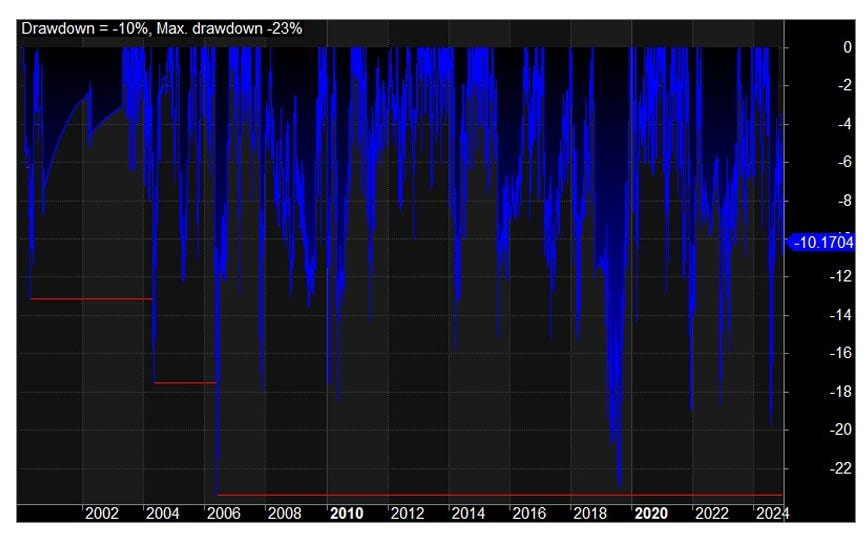
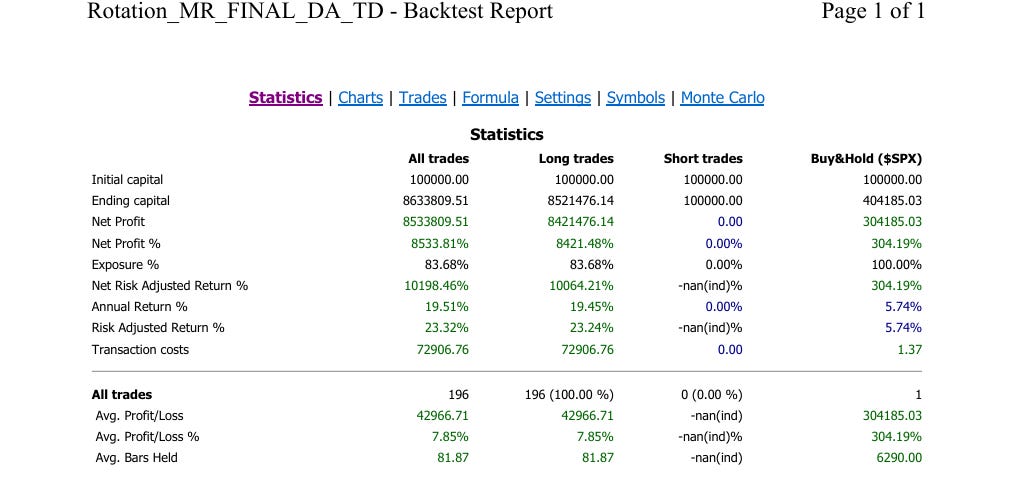
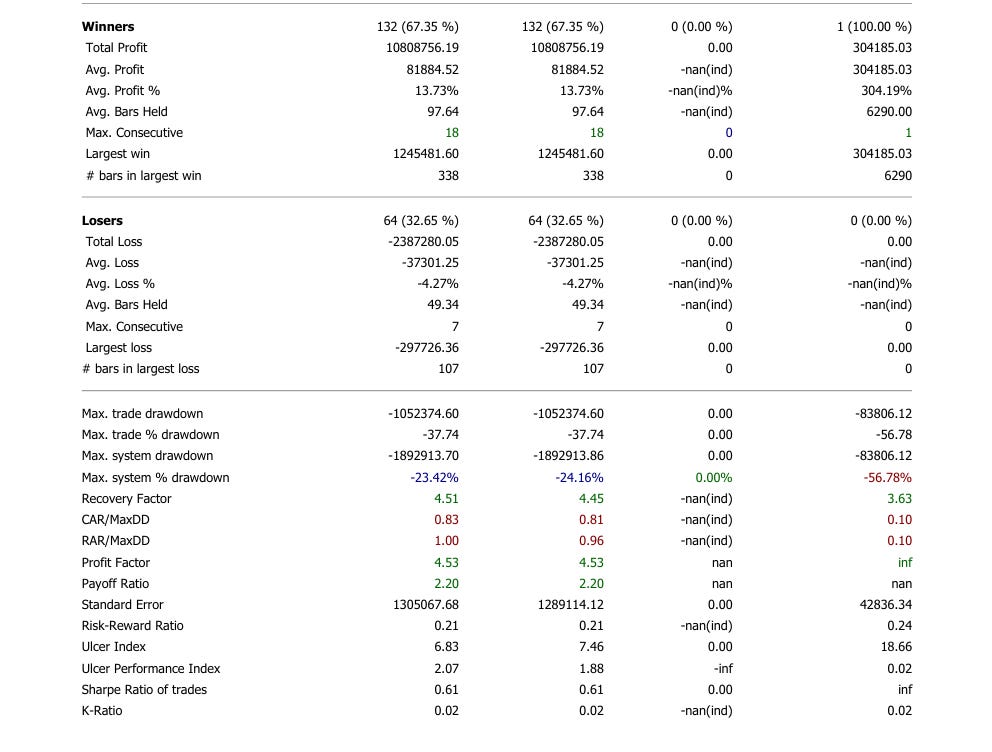
I am not sure what to think of monthly rotation yet: I was optimistic that this system would provide some alpha, and so far, that has just not been the case. It is a concentrated 3 ETF system which admits new signals based on relative momentum over a lookback period, and it’s rules hold that ETF for a month no matter what happens intra-month. It showed some very strong historical backtest results. So far, it has been all drawdown and nothing in the way of return, so maybe my timing is just bad? I can see from the historical monthly returns, that it is not unusual for this system to have a string of successive losing months (see highlights below):
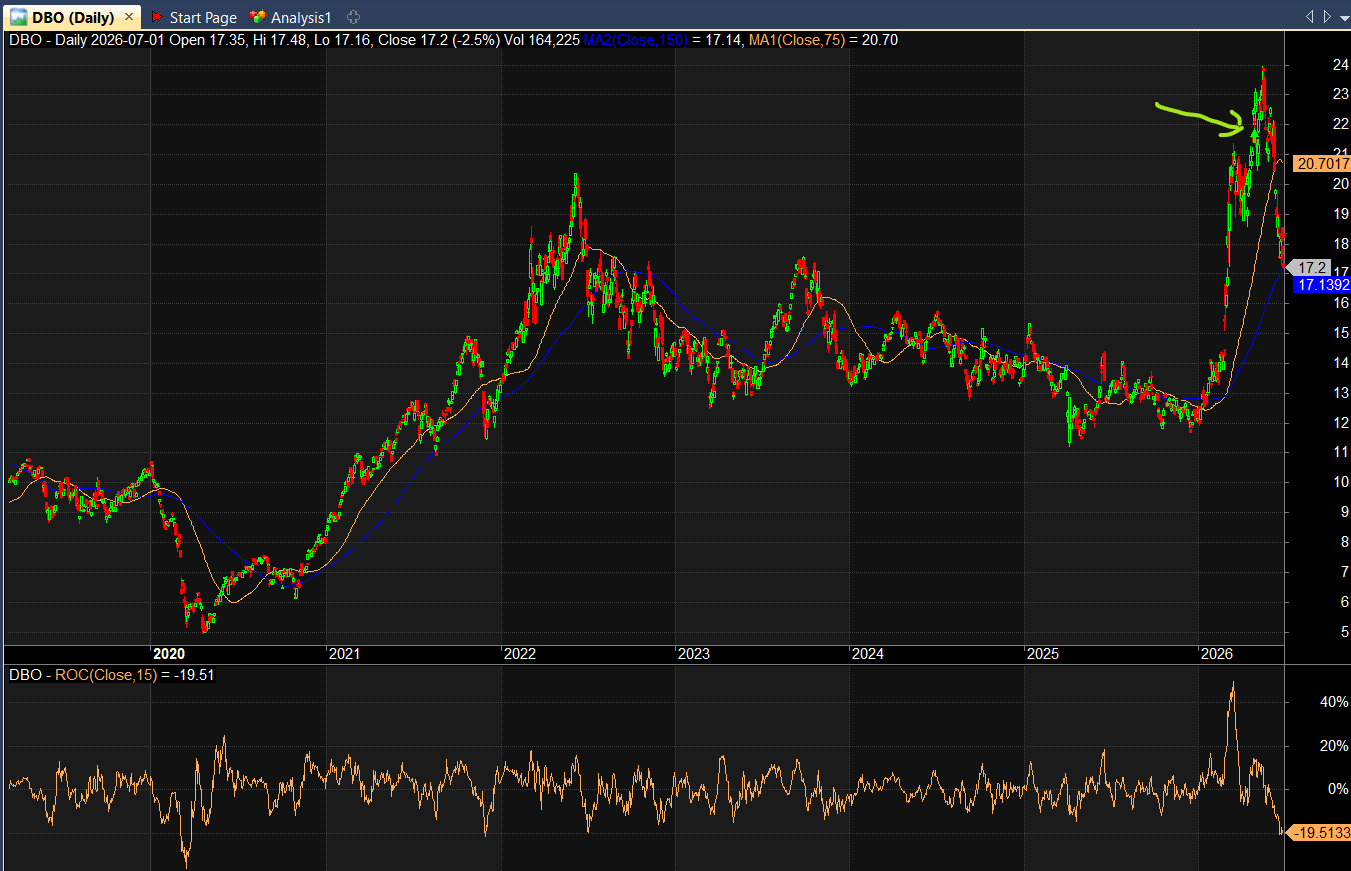
Case in point, monthly rotation entered DBO on April 1st based on strongest relative strength at a 1/3 weighting, and you can see how poor that selection has performed since initial entry:
From now until the end of the year, there is not much more to do outside of running the systems and taking the signals. By the end of the year, I will need to take a step back and perform an objective analysis of how each system performed vs. historical backtests, and make a determination of system efficiency: i.e., does the amount of trading justify running the system? I will at that point, try and make an objective determination regarding whether to reallocate capital or not. I don’t want to make the mistake of judging one year’s performance as a basis for reallocating between systems, and choose a stronger system in any one year, which may be an anomaly vs. weakness in another system. Lots to think about, but nothing to do about this currently.
Until next time.
“Lots to think about, but nothing to do about this currently.”
IMO, it is the right approach!
As far as monthly rotation, it took a hit in June, but the size of a “cushion” is important. After a good run, a retracement is an expected development. Furthermore, it is known that in momentum trading for hedge funds, customer account performance may diverge significantly from that of the master account due to the timing of investment. There are other nuisances; for example, the actual trade size may vary from theoretical throughout the year due to fluctuations in cash position. These realities of longer-term trading, when added to the demand for discipline, discourage many from pursuing it, but if the strategy is robust, monthly rotation can provide sufficient “timeframe diversification."